


By Jorge Araguez
Puerto Vallarta Beyond Real Estate
View Jorge's profile
There is something special about October in Puerto Vallarta. It is not quite high season yet, but it is no longer exactly the summer we have left behind. Afternoons can bring heavy rain, the heat still reminds us that we live on the Pacific coast, and meanwhile the city begins preparing to welcome those who return every winter.
In supermarkets, the first Halloween pumpkins, plastic skeletons, papel picado, and marigolds begin to appear. Sometimes all it takes is a few steps to go from a Day of the Dead display to Christmas trees, Halloween decorations in some stores, and leftovers from the Independence Day festivities—not to mention that Thanksgiving is also on its way.
It is a curious mix, sometimes a little chaotic, but very representative of Puerto Vallarta today: a Mexican city deeply rooted in its traditions and, at the same time, open to the customs of people who arrive from other parts of the world.
In our September journey, we talked about Mexican Independence, gastronomy, and the adventures of the green season. October invites us to continue that story, this time looking at our roots, our relationship with memory, and the way different cultures live side by side along the sea.
October and the Rainy Season in Puerto Vallarta
Anyone familiar with Puerto Vallarta knows that October is a month of transition.
The landscape holds on to the intense green that summer rains give us. The Sierra Madre mountains seem closer, clouds gather over the bay, and some afternoons bring spectacular skies.
But it is also important to remember that we are still in the official Pacific hurricane season, which runs from May 15 through November 30.
That does not mean October is necessarily a month of constant storms. There are sunny days, beautiful mornings, and perfect afternoons for a walk along the Malecón. Still, it is a time when residents and visitors should pay attention to weather forecasts and Civil Protection advisories.
Living in a coastal city also means learning to respect the weather.
As the month goes by, we begin to feel the rhythm of the city changing. Restaurants, shops, and tourism businesses prepare for more activity, while many international residents begin planning their return. It feels like waking up from a long summer slumber.
Day of the Dead: A Mexican Tradition That Celebrates Memory
To understand Day of the Dead, we have to begin with an idea that may surprise those of us who did not grow up in Mexico: during these days, death is not remembered only with sadness.
It is also remembered with food, music, flowers, stories, and often a smile.
Day of the Dead is a tradition that brings together ancient beliefs of Mexico’s Indigenous peoples with elements introduced during the colonial period and through Catholic tradition.
Its cultural richness is so significant that the Indigenous festivities dedicated to the dead have been on UNESCO’s Representative List of the Intangible Cultural Heritage of Humanity since 2008, following their original proclamation in 2003.
The best-known dates are November 1 and 2. In many communities, the first day is especially dedicated to remembering children who have passed away, and the second to adults. However, rituals and calendars vary by region and community.
According to tradition, during these days the souls of our loved ones may symbolically return to visit us.
And we prepare to welcome them.
The Day of the Dead Altar: Welcoming Those Who Remain With Us
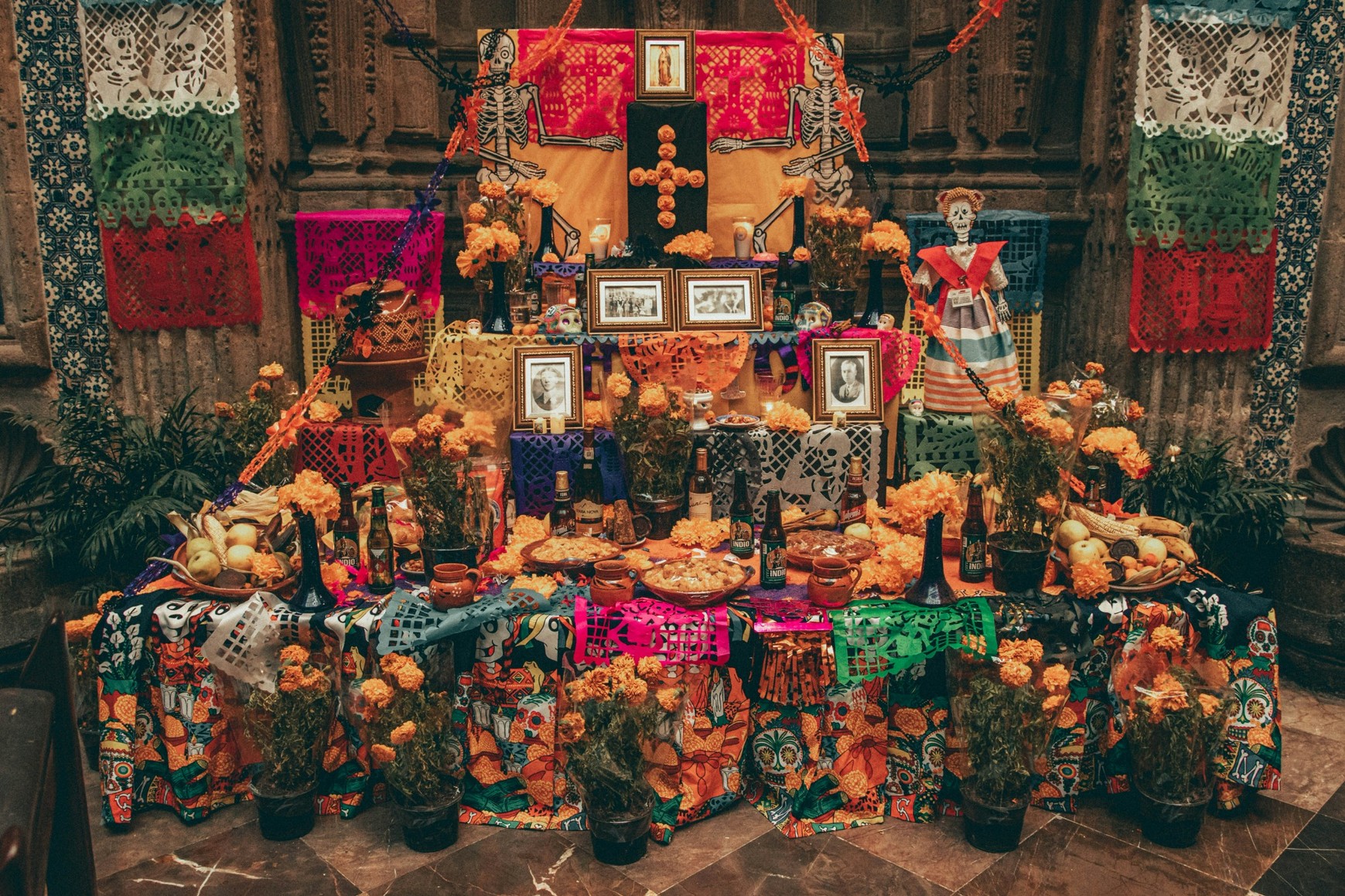
A Day of the Dead altar is not simply a decoration.
It is a way of telling a family’s story.
Each photograph represents a life. Each object may recall a hobby, a habit, or a moment shared. And every food placed there has a reason for being there.
Among the most common elements are marigolds, whose color and fragrance are associated with the souls’ path home; candles, symbolizing light; water, offered to quench their thirst after the journey; and pan de muerto, one of the most recognizable foods of the season—and one of the most delicious, I might add.
Families also place fruit, favorite dishes, personal keepsakes, and papel picado on their altars.
There is no single correct model for a family altar. Offerings change from one region to another and, above all, from one family story to another.
Perhaps that is why I find it one of Mexico’s most beautiful traditions: it allows us to keep talking, in our own way, with those who are no longer physically here.
A Story Told Through Objects
Imagine an old photograph on a table, next to a cup of coffee.
To a visitor, it might look like a simple scene. But for the person who made the altar, it may represent mornings shared with a father, mother, or grandparent.
Perhaps beside the photograph there is a family recipe, a special song, or a small object that no one else would understand.
That is the essence of Day of the Dead.
It is not only about remembering how they died, but also celebrating how they lived.
And while large public altars are impressive, small family altars can be just as moving.
My Day of the Dead Altar in Puerto Vallarta
I have been making my own altar for several years now. I always share photos on social media; just as we share our Christmas trees, we also share our improvised altars.
Beyond the flowers and candles, what matters to me is the meaning of remembering those who have been part of our lives.
Preparing an altar makes us stop for a moment, choose photographs, recover memories, and think about stories we may not tell often enough.
In the following video, I will show you my Day of the Dead altar in Puerto Vallarta.
[INSERT MY ORIGINAL ALTAR VIDEO HERE]
Because traditions are not only observed. They are lived, shared, and given a different meaning in every home.
La Catrina: From Social Criticism to a Symbol of Mexico
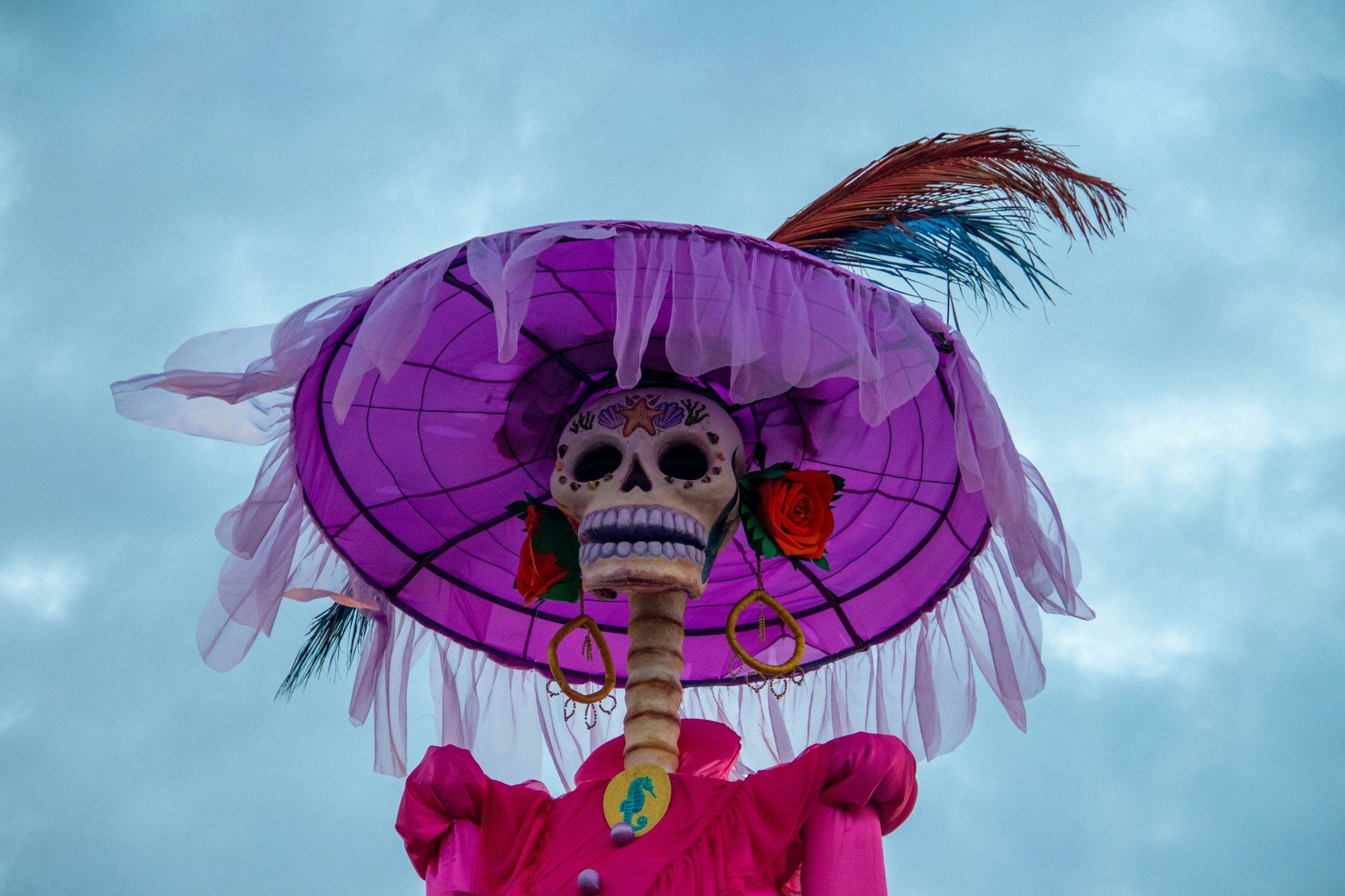
Today it is almost impossible to imagine Day of the Dead without a Catrina.
We see her in shop windows, paintings, photographs, costumes, and enormous public installations. But her history is more interesting than it might seem.
Her predecessor was the Calavera Garbancera, created by Mexican printmaker José Guadalupe Posada as a critique of people who tried to appear to belong to a different social class.
Years later, Diego Rivera brought that figure into his famous mural Dream of a Sunday Afternoon in the Alameda Central, depicting her elegantly dressed.
Over time, La Catrina became one of the most recognizable symbols of Mexican culture.
Behind her elegant hat and skull face lies a simple idea: regardless of our social position, we all share the same fate.
Perhaps that is why we can look at her with humor without losing sight of the deeper meaning of death.
Day of the Dead in Puerto Vallarta: When the Malecón Transforms
In Puerto Vallarta, this tradition unfolds against a particularly beautiful backdrop.
Flowers, Catrinas, and altars appear beside the sea, while the Historic Center and the Malecón welcome families, visitors, and residents.
In 2026, Puerto Vallarta is part of Jalisco’s Festival de las Almas, with cultural and artistic activities including Catrina displays, offerings, gastronomy, and performances in public spaces.
Announced activities include displays along the Malecón, altars in the Historic Center, and events dedicated to memory and local traditions.
Puerto Vallarta’s monumental Catrina has become a familiar image of these celebrations, especially since its installations earned international recognition for their height.
But there is something no photograph can fully capture: the feeling of walking along the Malecón at sunset, with the ocean on one side and expressions of a centuries-old tradition on the other.
It is an experience that connects Puerto Vallarta with the rest of Mexico while giving the city a character all its own.
Halloween and Day of the Dead: Two Traditions Side by Side
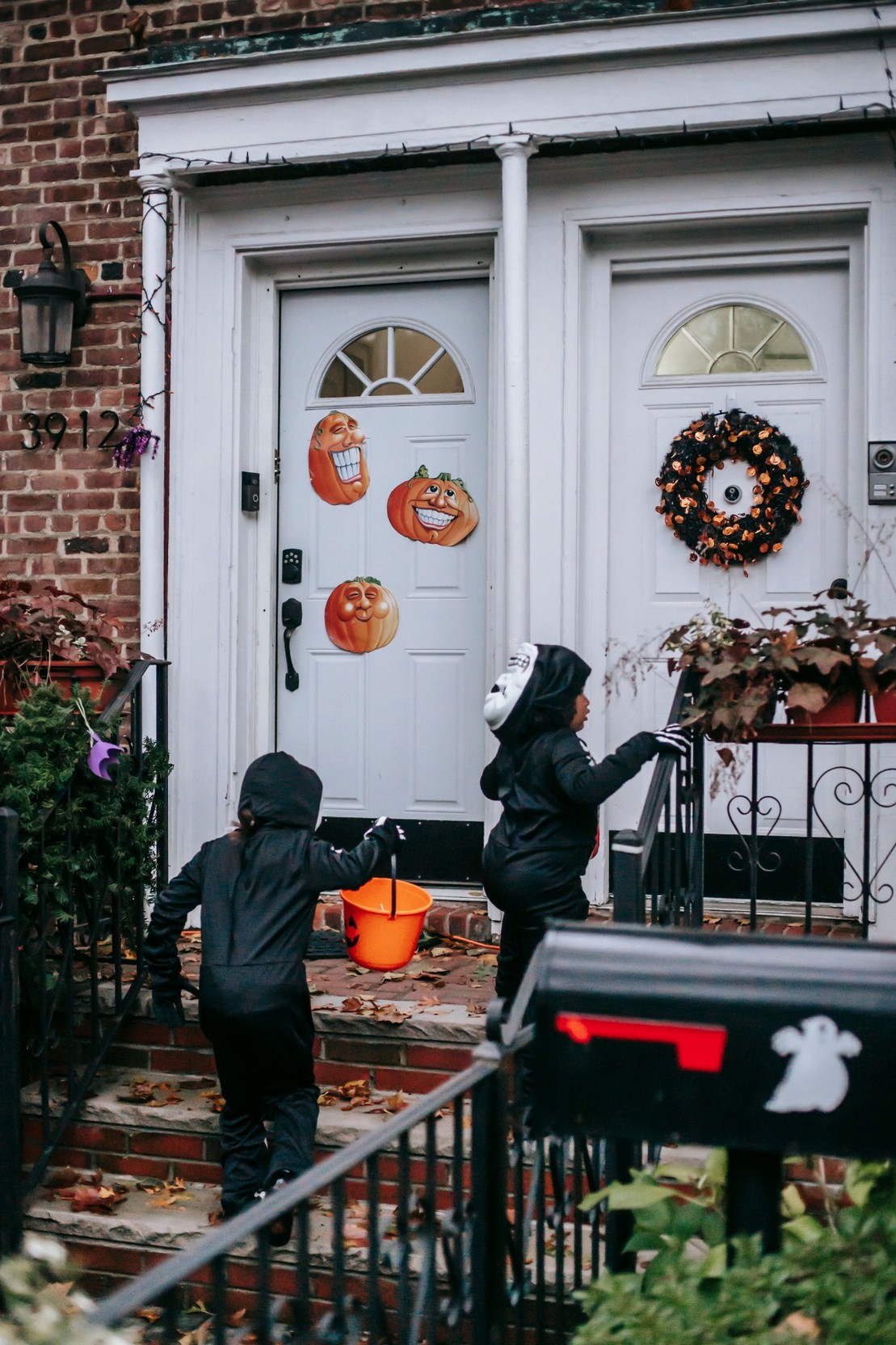
Halloween is also celebrated on the night of October 31.
In a city with a large international community like Puerto Vallarta, costume parties, pumpkin decorations, themed events, and activities for children are common.
Halloween and Day of the Dead have different histories and meanings.
Halloween, in its best-known contemporary form, is associated with costumes, entertainment, and elements of mystery or horror.
Mexico’s Day of the Dead is deeply connected to family memory, offerings, and the symbolic relationship between the living and those who have passed away.
Neither celebration needs to replace the other.
In Puerto Vallarta, we can see both traditions coexisting: a family prepares its altar while the children choose costumes; one restaurant decorates its entrance with pumpkins while another sets up an offering with photographs and marigolds.
That cultural coexistence is part of the city’s identity.
What matters is understanding the differences and respecting the meaning of each tradition.
The City Begins Preparing for High Season
As October draws to a close, Puerto Vallarta begins anticipating another change.
The season is approaching when many of our regular visitors return, especially from the United States and Canada.
The streets begin to regain their familiar energy, businesses prepare their activities, and the city gets ready for another season of reunions.
For those of us who live here year-round, this transition feels very familiar.
But before the December celebrations arrive, October gives us something special: an opportunity to remember where we come from and the people who accompanied us along the way.
Puerto Vallarta: Much More Than Beaches and Properties
When we talk about Puerto Vallarta, we usually think of its beaches, gastronomy, sunsets, and real estate market.
All of that is part of the city, but it does not fully explain why so many people decide to stay.
Living here also means discovering its traditions, understanding its history, and taking part in the everyday life of its neighborhoods.
October reminds us of exactly that.
Behind tourist destinations are communities, families, memories, and customs that continue to give these places their identity.
And between a tropical rainstorm, a marigold, and a sunset over the bay, Puerto Vallarta always has another story to tell.
Puerto Vallarta Beyond Real Estate
Contact Jorge Araguez
View Jorge's profile at Kara Realtors
Email: jorge@kararealtors.com
Phone: +52 1 322 156 9726
Contact Jorge on WhatsApp